Launch offer — valid today only

Transport Canada Basic and Advanced Drone Exams, Explained with Drawings One Topic per Page, Updated to the November 4, 2025 Rules

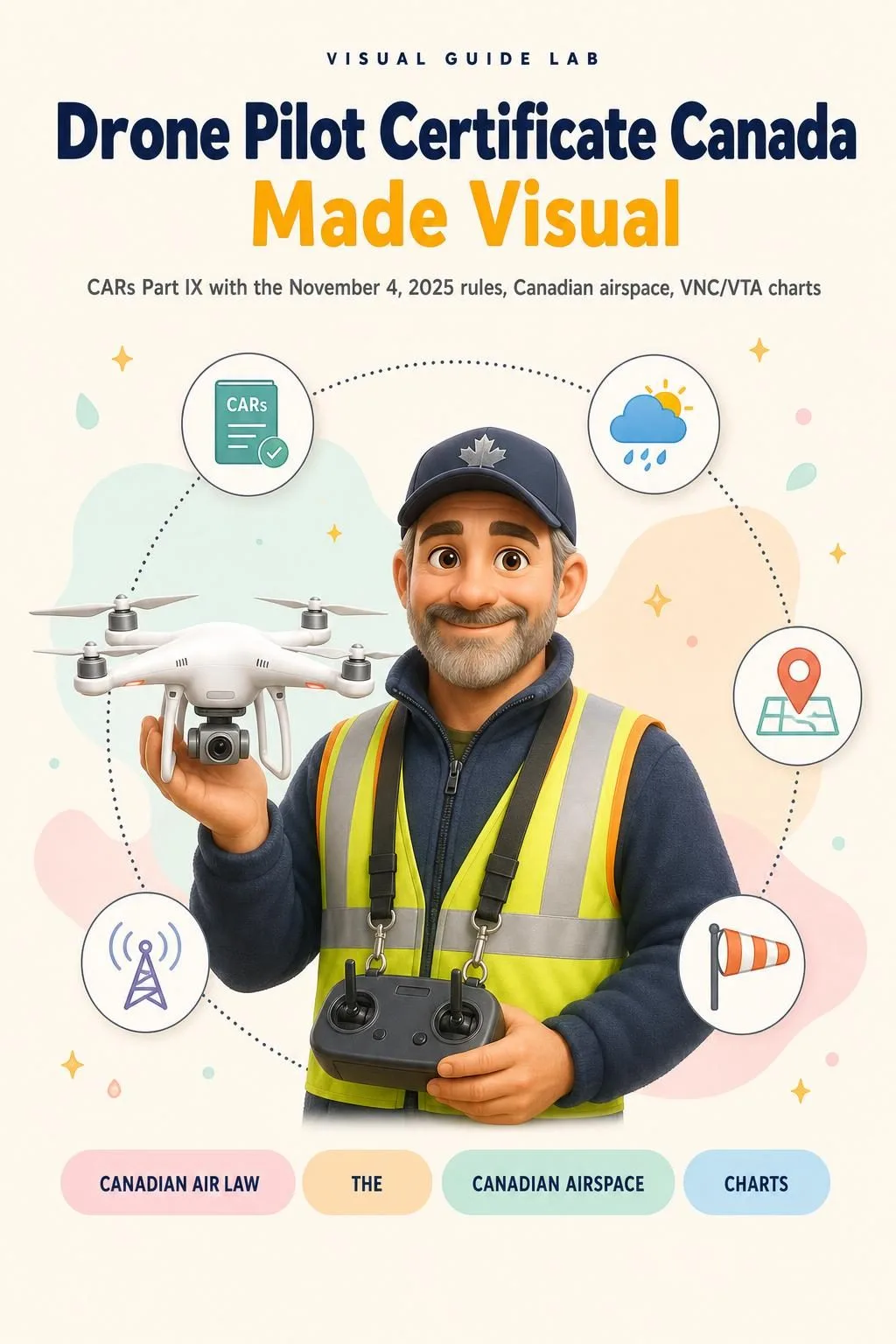
Air law, the November 2025 rules, airspace, charts, weather and radio. One topic per page, with the drawing and what you need to remember. 84 illustrated pages. 84 illustrated pages.

YES, I WANT THE ILLUSTRATED GUIDE

🔒 Secure checkout · PDF by email · 30-day guarantee

One topic per pagethe drawing shows you the rule and the text walks you through it
84 illustrated pages8 parts, from CARs Part IX to the flight review
Up-to-date sourcesIndependent guide based on Transport Canada CARs Part IX, TP 15263 and NAV CANADA publications

This Is What the Pages You Will Study Look Like

One topic per page, with the drawing that shows you how it works and boxes with what you need to know:

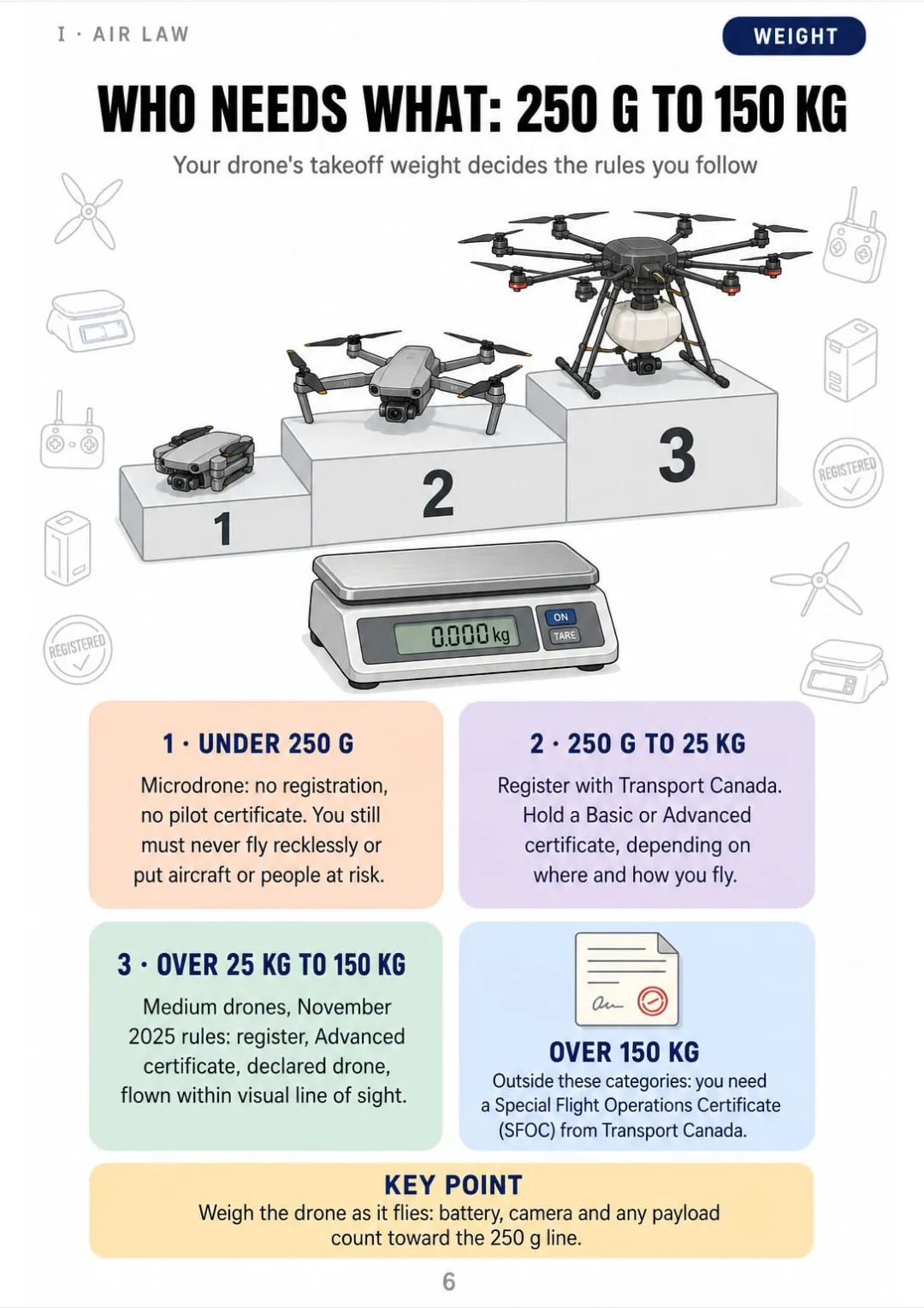
Under 250 g, 250 g–25 kg, over 25 kg–150 kg: what each step requires
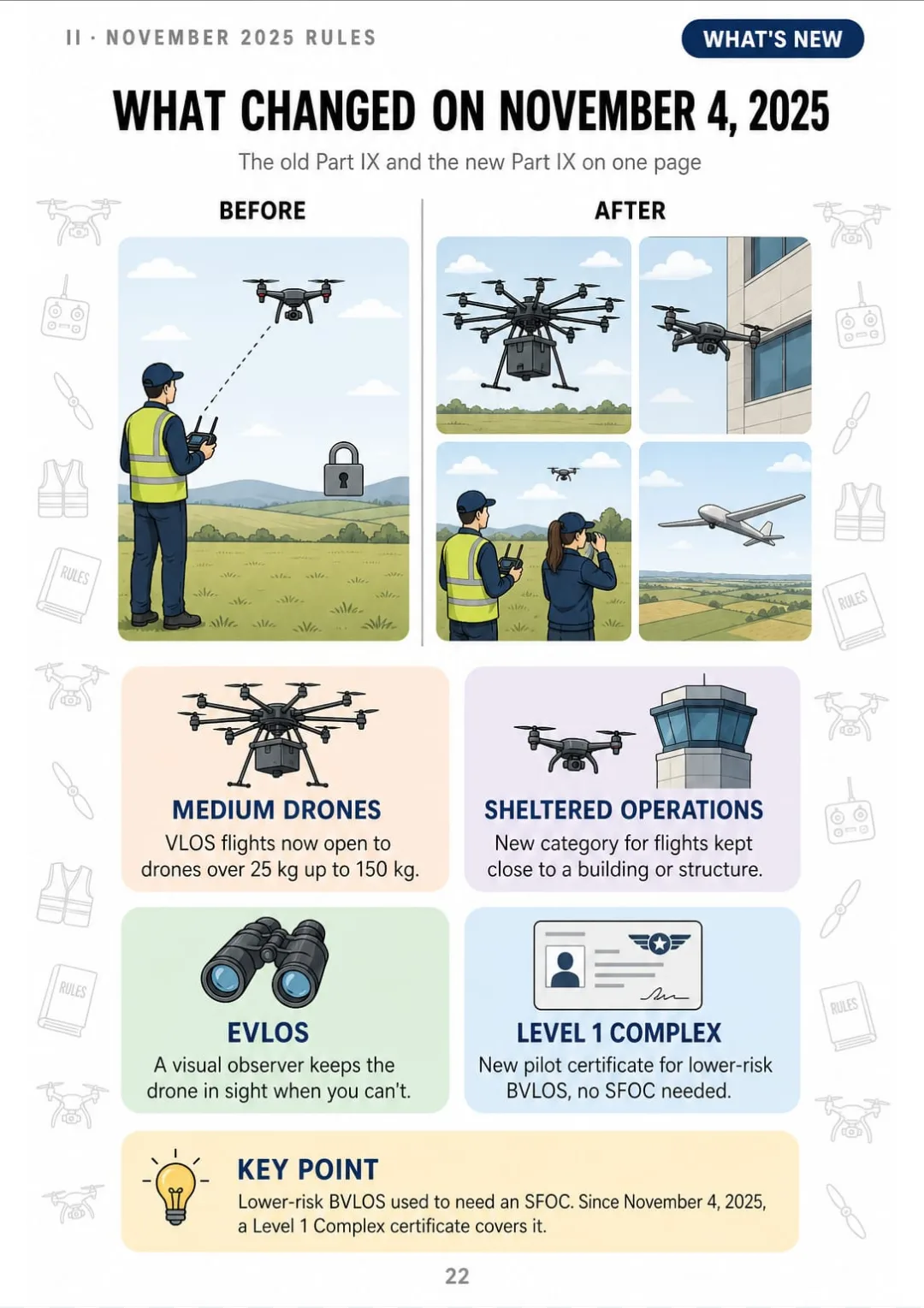
Before vs after November 4, 2025: medium drones, sheltered, EVLOS and Level 1 Complex
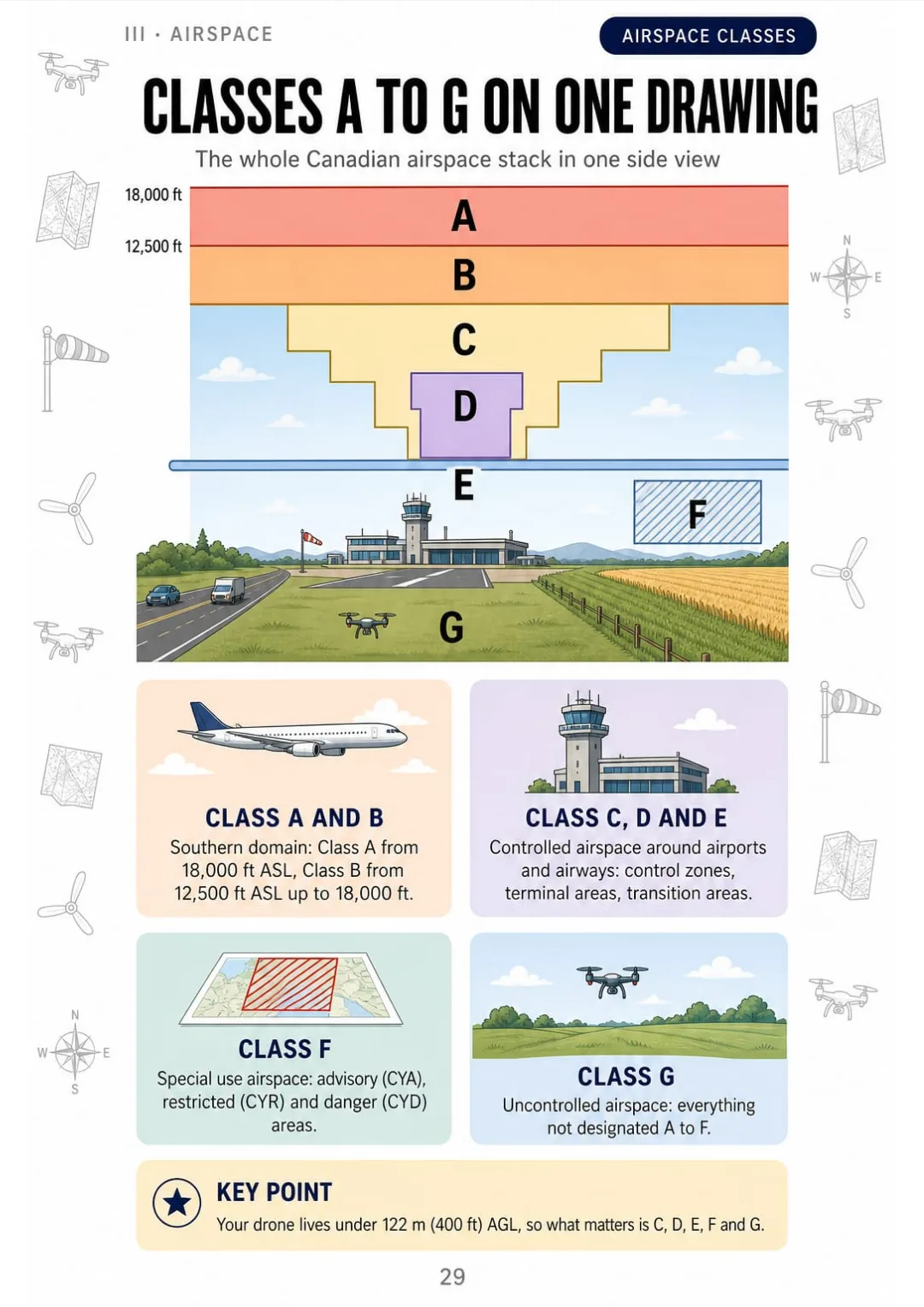
Class A from 18,000 ft, Class B from 12,500 ft, C to G down to the ground
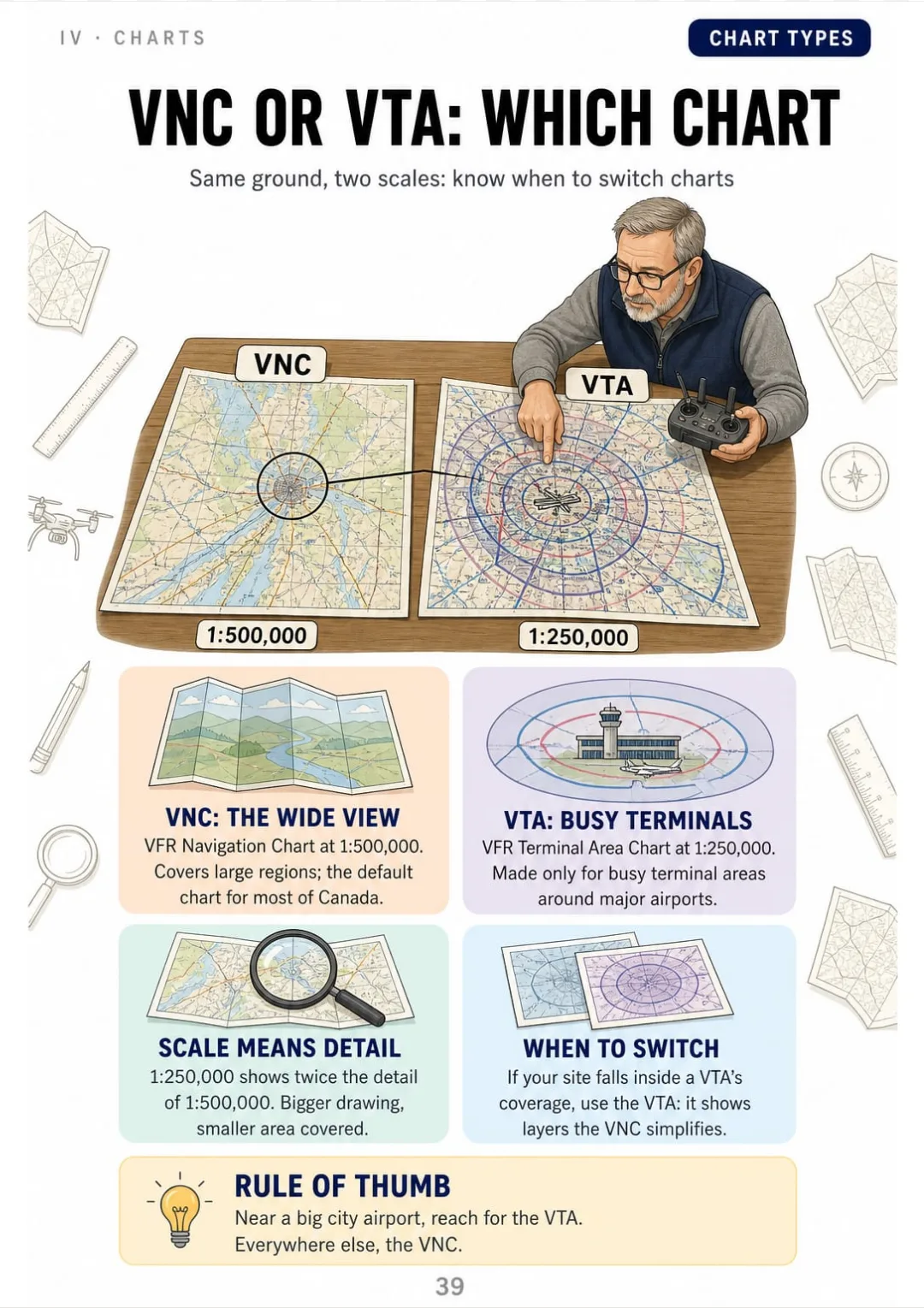
VNC at 1:500,000 vs VTA at 1:250,000, drawn side by side
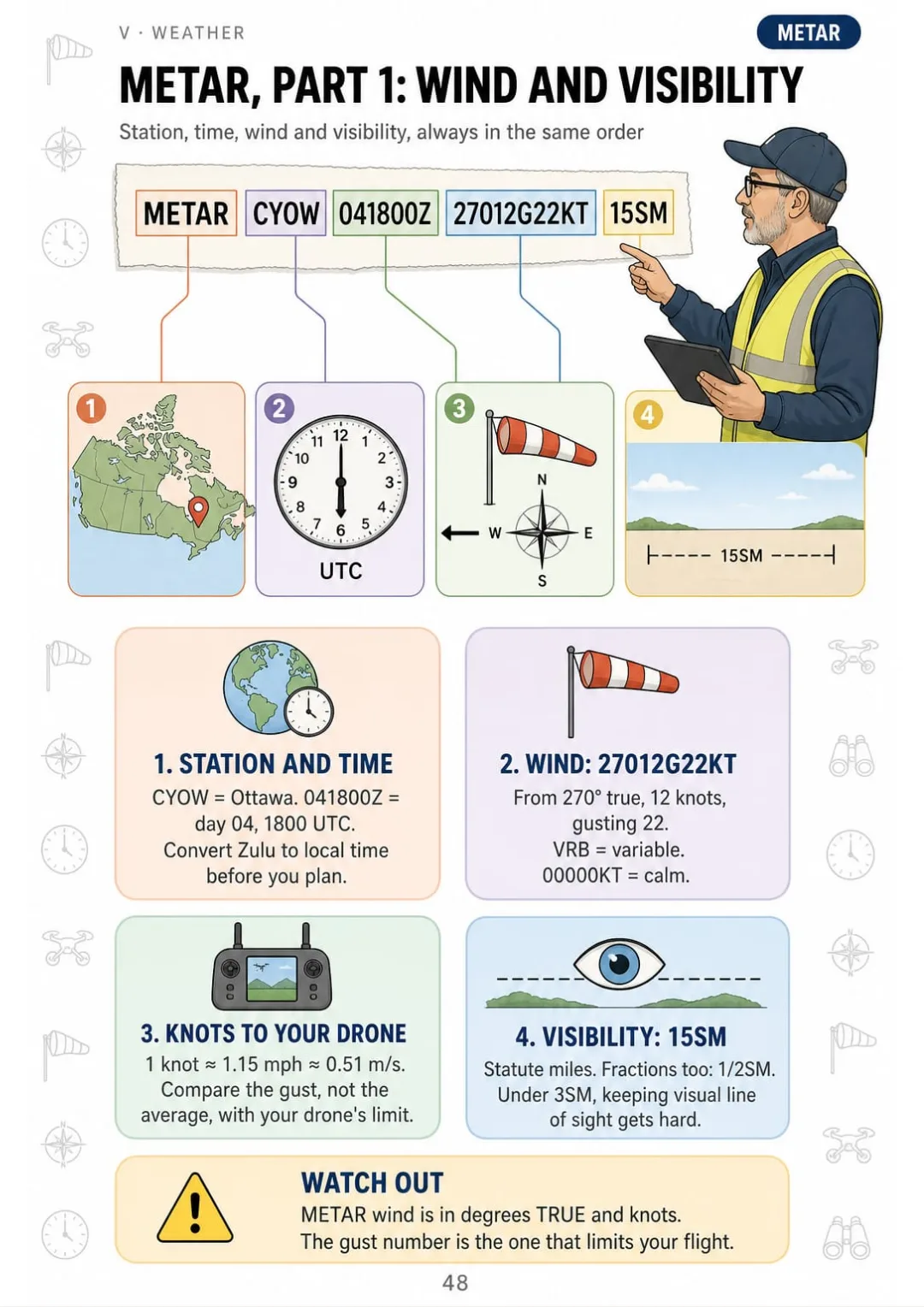
27012G22KT: from 270° true, 12 knots, gusting 22 — decoded group by group.
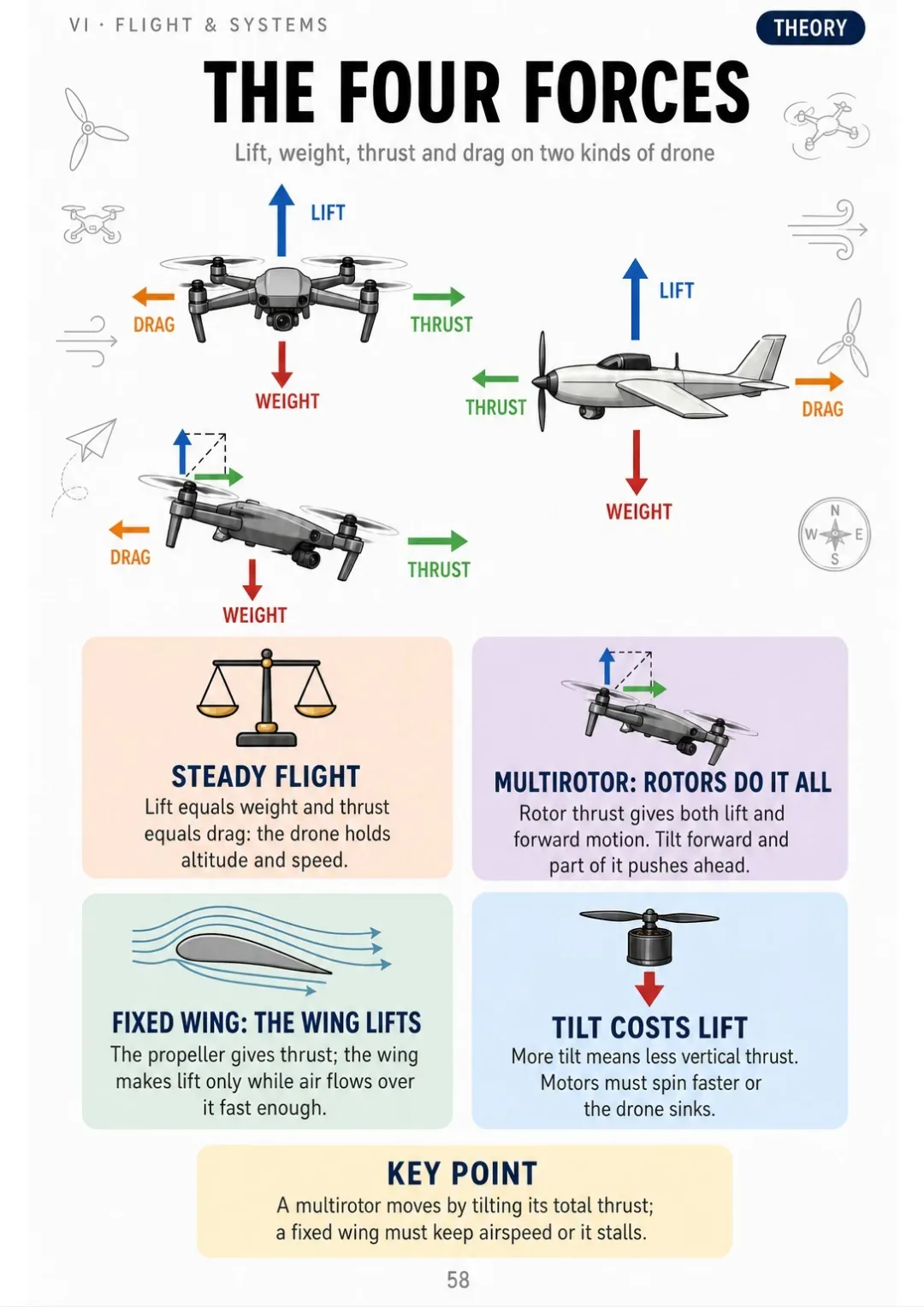
Lift, weight, thrust and drag drawn on a quadcopter and a fixed-wing drone
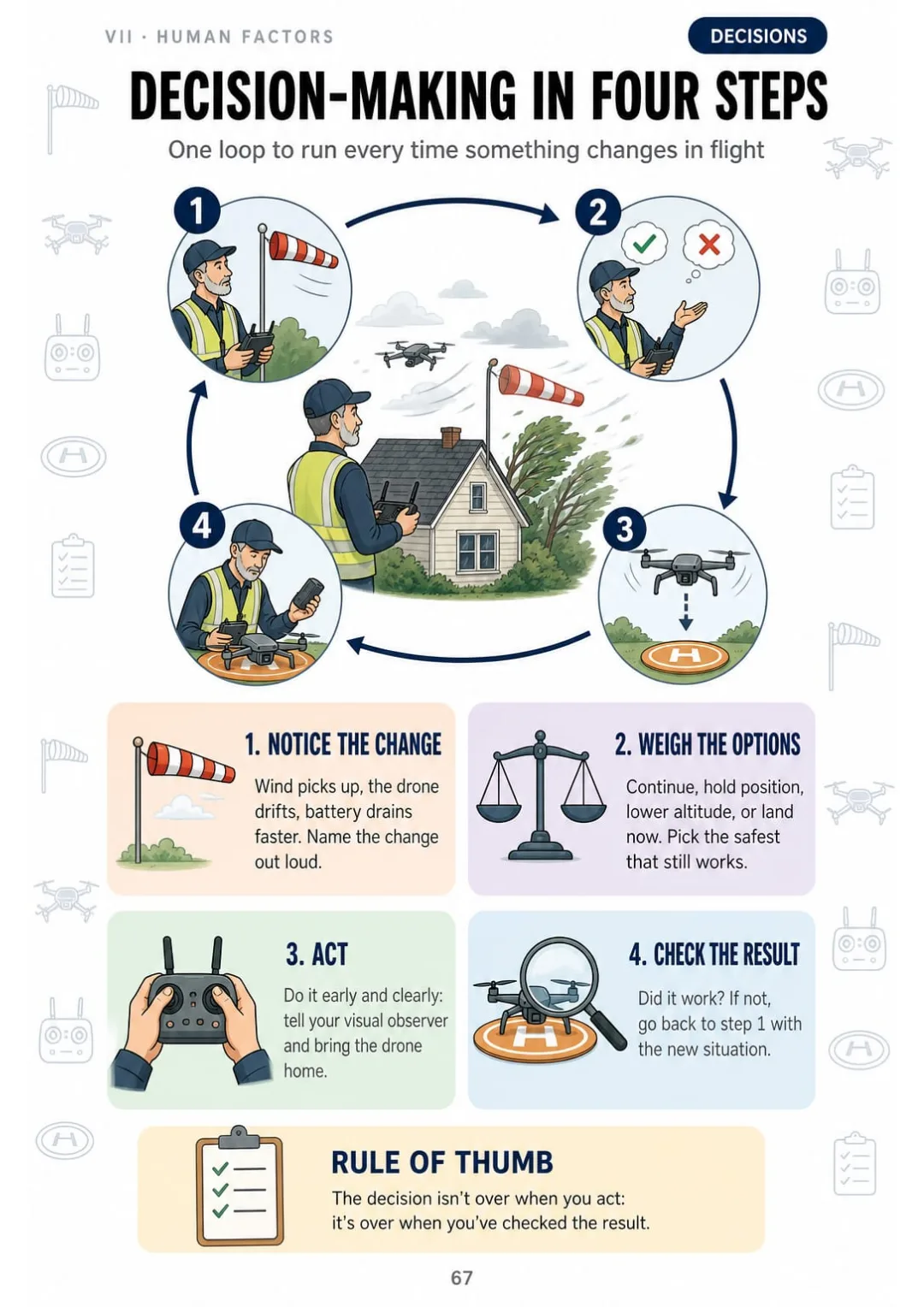
The decision loop: notice the change, weigh the options, act, check the result.
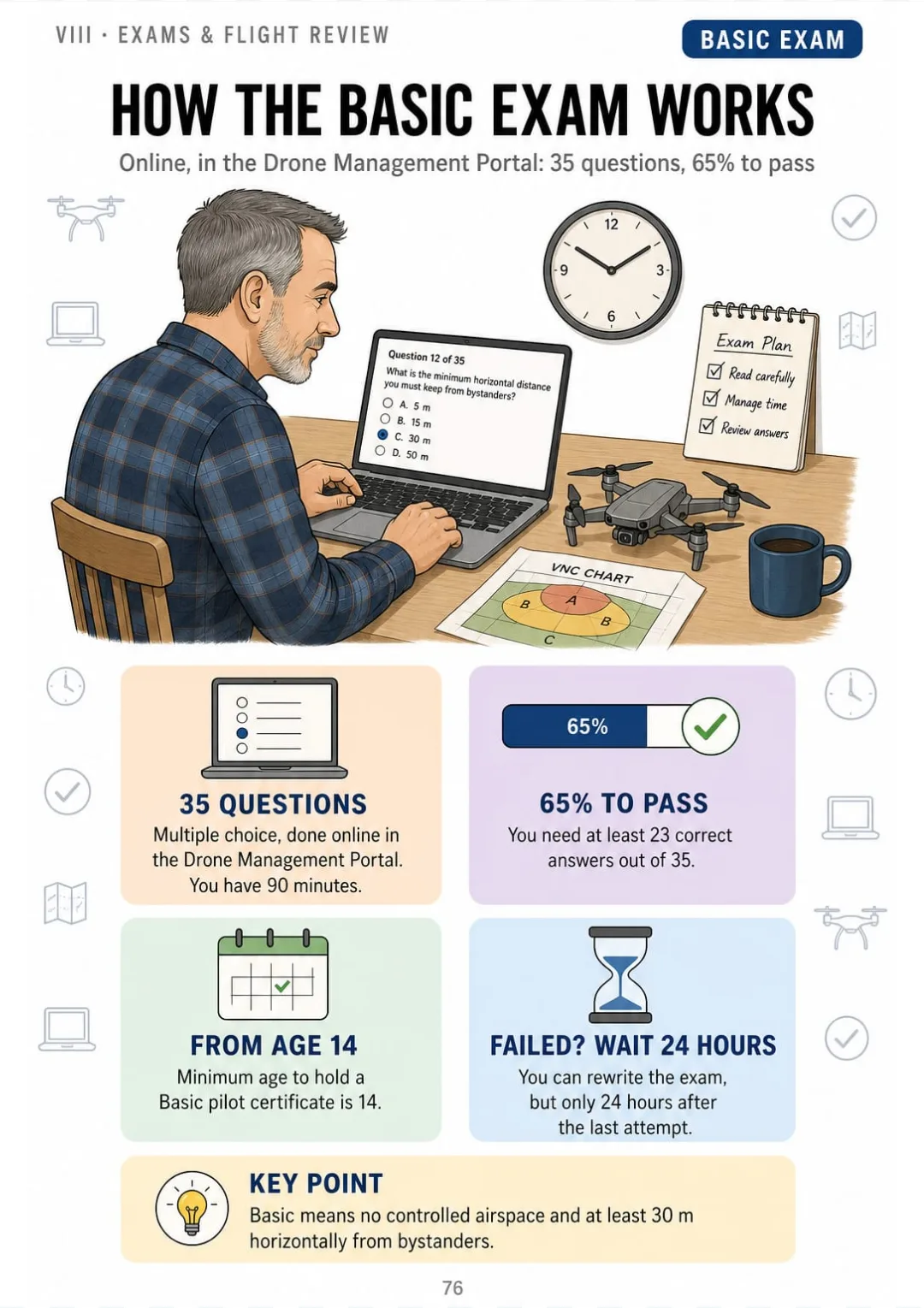
Basic exam: 35 questions · 90 minutes · 65% · from age 14 · 24-hour wait to rewrite

Swipe to see more →

These are real pages from the book. The table of contents is the full one: 8 parts and 79 topics.

It's Not That You Have a Bad Memory. It's That No One Put It in Order.

You've read about the Canadian airspace classes three times. You close the study guide...

...and you can't remember which class starts where. It was just line after line of text.

Class A from 18,000 ft, Class B from 12,500 ft, C to G down to the ground

Here, airspace is one page with one drawing, stacked in layers: Class A from 18,000 ft, Class B from 12,500 ft, and C to G going down to the ground.

And on the pages next to it, every topic gets its own drawing: control zones, Class F advisory and restricted areas, VNC and VTA charts, the CFS and the METAR.

First you understand why it's built that way. Then you remember the layers without trying.

SEE THE DIFFERENCE

Stop Memorizing Rules You Can't Picture:

THIS
  • Pages and pages of dense text
  • Rules without a single drawing
  • On exam day, you don't know where to start
Pursuant to the amendments to Part IX of the Canadian Aviation Regulations coming into force on November 4, 2025, the operation of remotely piloted aircraft systems having a maximum take-off weight greater than 25 kg but not exceeding 150 kg within visual line-of-sight is permitted under the advanced operations category, subject to the applicable declaration requirements; furthermore, provisions respecting sheltered operations, extended visual line-of-sight operations conducted with the assistance of a visual observer, and the Level 1 Complex operations category, together with the associated pilot certification, are hereby established.
FOR THIS
  • Every rule drawn
  • One topic per page, with the rules in boxes
  • You remember it because you've seen it
Before vs after November 4, 2025: medium drones, sheltered, EVLOS and Level 1 Complex
CONTENTS

Take a Look at the 8 Parts and 79 Topics

Canadian air law, the November 2025 rules, airspace, charts and the CFS, weather, theory of flight, human factors and radio, and the exams and flight review: 84 pages, all illustrated

ICanadian Air Law: CARs Part IX · pp. 6-21
  1. Who needs what: 250 g to 150 kg
  2. Basic operations: the conditions
  3. Advanced operations: what it unlocks
  4. Registering and marking your drone
  5. Pilot certificates and 24-month recency
  6. Maximum altitude: 122 m (400 ft) AGL
  7. Distance from bystanders: Basic vs Advanced
  8. Declared drones and Standard 922
  9. Visual line of sight and visual observers
  10. Airports, heliports and aerodromes
  11. Where you can't fly: parks, events, emergencies
  12. Fitness to fly: alcohol, drugs and fatigue
  13. The site survey before every flight
  14. Briefings, emergency procedures and logs
  15. Incidents and accidents: who to report to
  16. Part I review
IIThe November 2025 Rules · pp. 22-28
  1. What changed on November 4, 2025
  2. Sheltered operations: 30 m and 61 m
  3. EVLOS with a visual observer
  4. Medium drones (over 25 kg to 150 kg) in VLOS
  5. Level 1 Complex and BVLOS at a glance
  6. Fees, the Drone Management Portal and SFOCs
  7. Part II review
IIICanadian Airspace · pp. 29-38
  1. Classes A to G on one drawing
  2. Controlled vs uncontrolled airspace
  3. Control zones and terminal areas
  4. Class E and transition areas
  5. Class F: advisory (CYA) and restricted (CYR)
  6. NAV CANADA authorization through NAV Drone
  7. NOTAMs
  8. Mandatory frequency and ATF areas
  9. Aerodrome traffic circuits
  10. Part III review
IVCharts and the CFS Step by Step · pp. 39-47
  1. VNC and VTA: which chart, which scale
  2. Latitude and longitude
  3. Chart symbols and aerodromes
  4. Airspace boundaries and altitudes on the chart
  5. ASL and AGL
  6. Reading a CFS entry
  7. Can I fly here? A 5-step routine
  8. Chart practice
  9. Part IV review
VWeather · pp. 48-57
  1. Reading a METAR (1/2): wind and visibility
  2. Reading a METAR (2/2): sky, temperature, altimeter
  3. Reading a TAF
  4. The graphic area forecast (GFA)
  5. Where to get aviation weather in Canada
  6. Pressure, density altitude and altimetry
  7. Air masses, fronts and stability
  8. Thunderstorms, icing and fog
  9. Wind and turbulence near the ground
  10. Part V review
VITheory of Flight, Systems and Performance · pp. 58-66
  1. The four forces: multirotor and fixed wing
  2. Rotors and propellers
  3. Load factor
  4. Weight and balance
  5. Performance charts
  6. Lithium batteries: heat, cold and transport
  7. GNSS, compass and IMU
  8. Lost link, flyaways and maintenance records
  9. Part VI review
VIIHuman Factors and Radio · pp. 67-75
  1. Aeronautical decision-making
  2. The hazardous attitudes
  3. IMSAFE and fitness checks
  4. Situational awareness and crew coordination
  5. Vision and scanning for traffic
  6. The phonetic alphabet and numbers
  7. Standard radio phrases
  8. Calling on an MF or ATF
  9. Part VII review
VIIIThe Exams and the Flight Review · pp. 76-84
  1. How the Basic exam works
  2. How the Advanced exam works
  3. Practice questions 1-10
  4. Practice questions 11-20
  5. Practice questions 21-30
  6. Practice questions 31-40
  7. Practice questions 41-50
  8. The flight review: what the reviewer checks
  9. After you pass: your certificate

What If Every Topic Fit on a Single Page?

Picture this:

Instead of rereading half a page about the Canada Flight Supplement without being able to picture it...

...you open the page and find a real CFS entry broken down piece by piece, with what each line tells you before you fly.

27012G22KT: from 270° true, 12 knots, gusting 22 — decoded group by group.

And the 122 m altitude limit, the airspace classes, VNC and VTA charts, METARs and the four forces turn into drawings and tables you can read at a glance.

You stop repeating and start understanding.

That's exactly what Drone Pilot Certificate Canada Made Visual does. It's not "just another manual." It's 8 parts and 79 illustrated topics, and at the end there are 50 exam-style practice questions, each with the answer explained. Because what your brain sees in order, it remembers.

Because what your brain sees organized, it remembers.

Here Is What You Get with Drone Pilot Certificate Canada Made Visual:

Ipp. 6-21

Canadian Air Law: CARs Part IX

You'll know which certificate you need from 250 g to 150 kg: Basic vs Advanced, registration and marking, 24-month recency, the 122 m limit, distance from bystanders, airports, the site survey, logs and reporting.

IIpp. 22-28

The November 2025 Rules

What changed on November 4, 2025: sheltered operations, EVLOS with a visual observer, medium drones, Level 1 Complex, fees, the Drone Management Portal and SFOCs.

IIIpp. 29-38

Canadian Airspace

Classes A to G on one drawing, control zones and terminal areas, Class E, Class F (CYA and CYR), NAV Drone authorization, NOTAMs, MF and ATF areas and traffic circuits.

IVpp. 39-47

Charts and the CFS Step by Step

You'll answer "Can I fly here?" with the same 5 steps every time: VNC vs VTA, latitude and longitude, chart symbols, airspace boundaries, ASL vs AGL and reading a CFS entry, with practice.

Vpp. 48-57

Weather

METAR and TAF decoded line by line, the GFA, where to get aviation weather in Canada, pressure and density altitude, fronts, thunderstorms, icing, fog and wind near the ground.

VIpp. 58-66

Theory of Flight, Systems and Performance

The four forces on a multirotor and a fixed wing, rotors, load factor, weight and balance, performance charts, lithium batteries, GNSS, compass and IMU, and lost link.

VIIpp. 67-75

Human Factors and Radio

Decision-making, hazardous attitudes, IMSAFE, situational awareness, scanning for traffic, the phonetic alphabet, standard phrases and calls on an MF or ATF.

VIIIpp. 76-84

The Exams and the Flight Review

How the Basic and Advanced exams work, 50 practice questions in five sets of 10, what the flight reviewer checks and how to get your certificate.

At the end of the book: 50 exam-style practice questions with the answer explained and the page to reread.
And That Is Not All: 2 More Books, Free

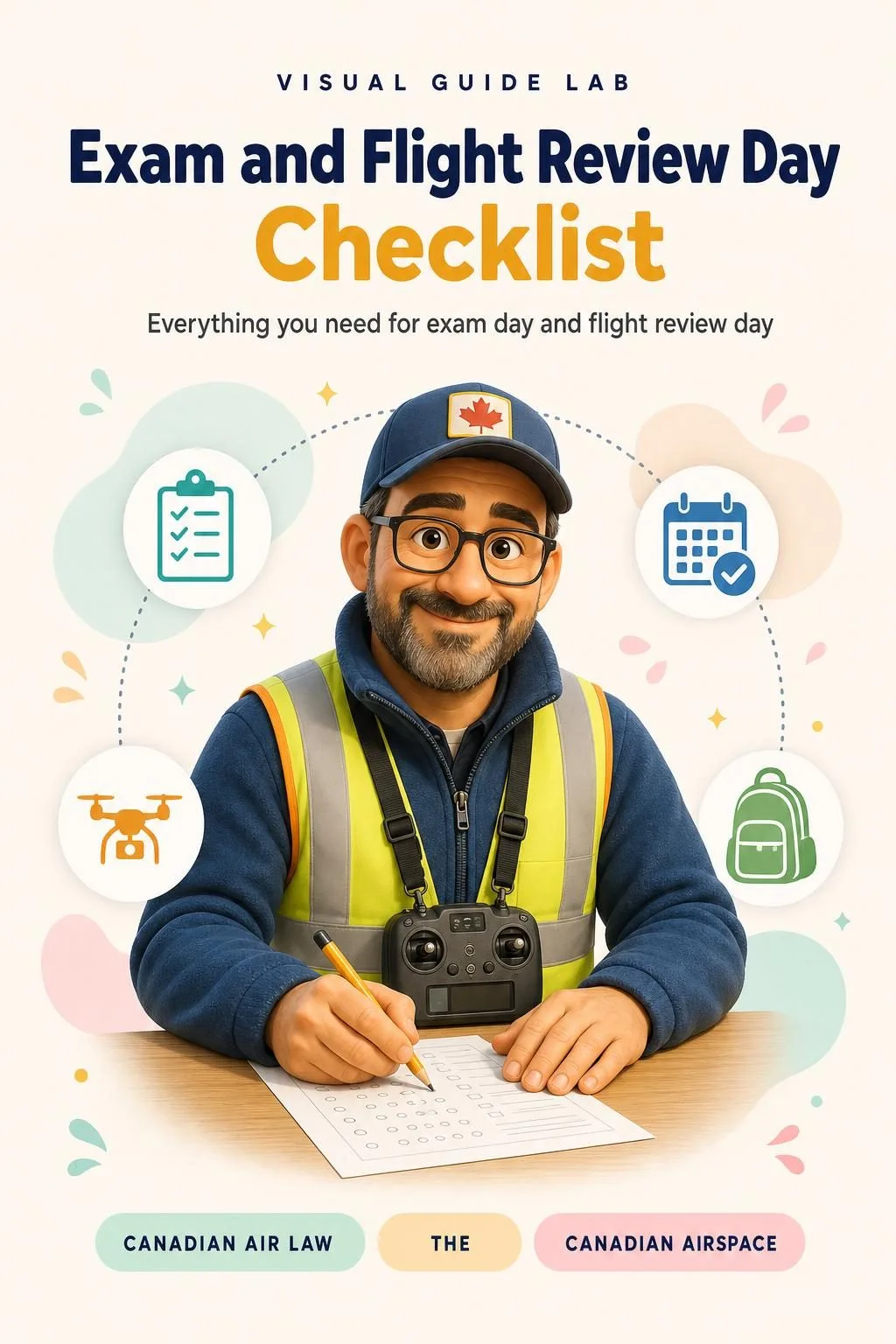
Exam and Flight Review Day Checklist

BONUS 1: «Exam and Flight Review Day Checklist»

Value on its own: CA$ 24.99

Everything you need for exam day and flight review day: setting up your Drone Management Portal account, which exam to take, the 24-hour rewrite rule, finding and booking a flight reviewer, what to bring to the review (your drone, site survey, checklists and logs) and what to do after you pass to get your certificate.

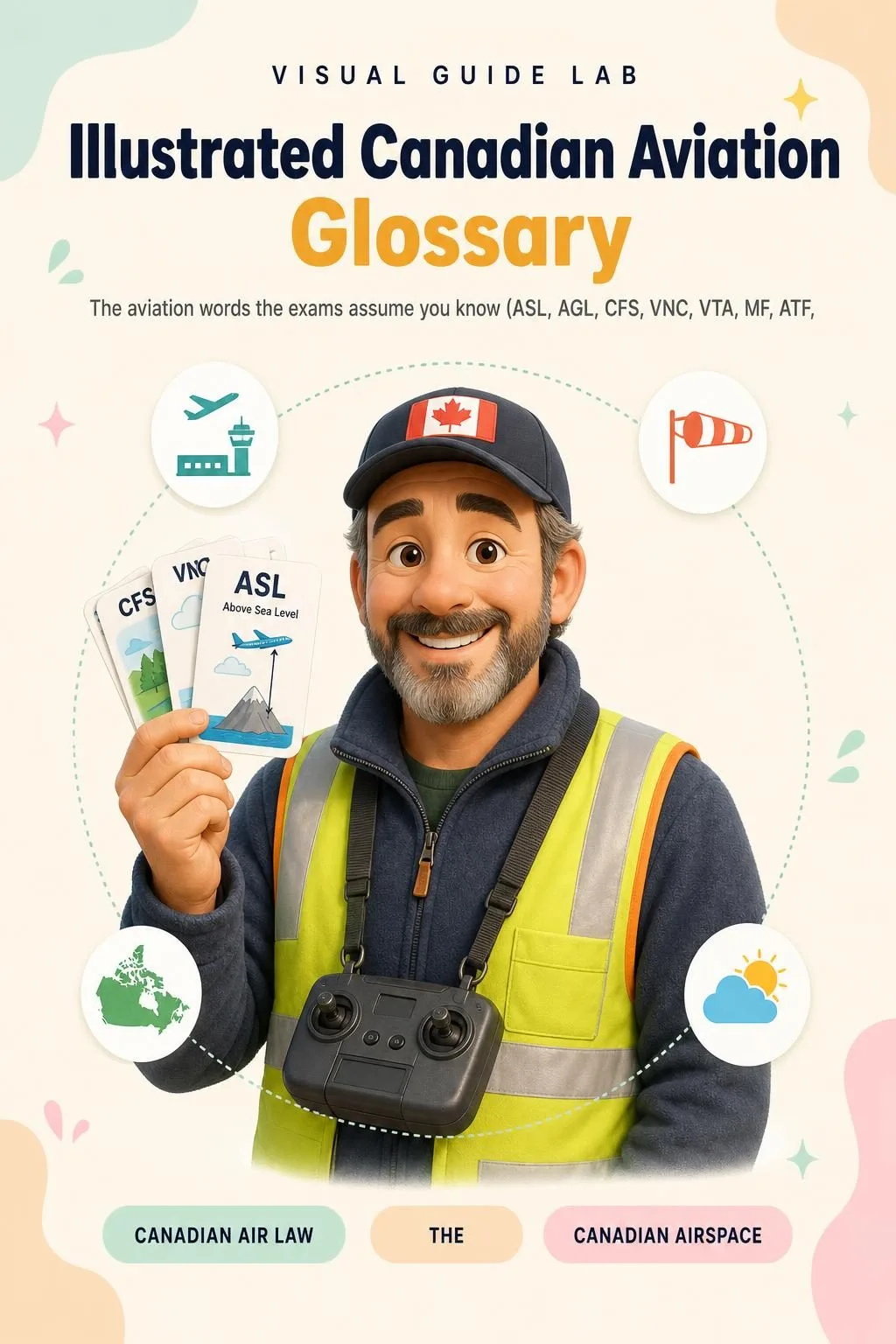
Illustrated Canadian Aviation Glossary

BONUS 2: «Illustrated Canadian Aviation Glossary»

Value on its own: CA$ 19.99

The aviation words the exams assume you know (ASL, AGL, CFS, VNC, VTA, MF, ATF, CYA, CYR, NOTAM, SFOC, EVLOS, visual observer…), each one with a small drawing and a plain-English definition.

Drone Pilot Certificate Canada Made Visual + 2 Free Books

  • Drone Pilot Certificate Canada Made Visual: 84 illustrated pagesCA$ 79.99
  • BONUS 1: Exam and Flight Review Day ChecklistCA$ 24.99
  • BONUS 2: Illustrated Canadian Aviation GlossaryCA$ 19.99
  • High-resolution PDF to printIncluded
Total value CA$ 124.97
YOUR PRICE:
CA$ 34.99
You save CA$ 89.98
YES, I WANT DRONE PILOT CERTIFICATE CANADA MADE VISUAL FOR CA$ 34.99

📄 This is a digital PDF book sent to your email: nothing is printed or shipped.

Secure purchaseEncrypted payment30-day guarantee

PDF by email: Drone Pilot Certificate Canada Made Visual reaches your inbox as a PDF, and the two free books come by email too. One-time payment, no installments or hidden costs.

Is This Book for You?

You're studying for the Basic

You're studying for the Basic

Who needs what, the 122 m limit, airspace and weather, one topic per page, so you can study in short sessions after work.

Your Advanced exam is coming up

Your Advanced exam is coming up

A review of every exam part, including the November 2025 rules and the Advanced-only topics marked, plus 50 exam-style questions with the answer and the page to reread.

You already fly for clients

You already fly for clients

A quick visual refresher for real jobs: the site survey, NAV Drone authorization, CFS entries and METARs, to keep on hand or print.

To Sum Up: Here Is What You Get

CA$ 124.97CA$ 34.99
YES, I WANT DRONE PILOT CERTIFICATE CANADA MADE VISUAL FOR CA$ 34.99

📄 This is a digital PDF book sent to your email: nothing is printed or shipped.

30DAYS
GUARANTEE

30-Day Guarantee

30-day guarantee: tell us what didn't work and we'll refund 100%.

You have 30 days to try Drone Pilot Certificate Canada Made Visual and the two bonus books. If it doesn't work for you, tell us what didn't work and we'll refund 100% of what you paid. Just reply to the email you received with your purchase. One-time payment, no subscription.

Frequently Asked Questions

How do I get the material?

After your purchase, you get an email at the address you enter at checkout, with Drone Pilot Certificate Canada Made Visual as a high-resolution PDF that you can read on your phone or print. The two bonus books, Exam and Flight Review Day Checklist and Illustrated Canadian Aviation Glossary, also come by email. If it doesn't arrive, check your spam folder or reply to us and we'll resend it.

Is it a monthly or one-time payment?

It's a one-time payment, charged in Canadian dollars. No installments and no subscription.

Who is it for?

It's for anyone preparing for the Transport Canada Basic or Advanced RPAS exam, and for the Advanced flight review, under the rules in force since November 4, 2025. It also works for pilots who already fly for clients and want a visual refresher. It covers Canadian rules only. The book doesn't give you a certificate: your pilot certificate comes only from Transport Canada, through the Drone Management Portal, once you pass the exam (plus the flight review for the Advanced).

What sources is it based on?

It's based on the Canadian Aviation Regulations Part IX with the rules in force since November 4, 2025, Standards 921 and 922, TP 15263 (Knowledge Requirements for Pilots of RPAS) and the TC AIM. It also uses NAV CANADA publications: the Canada Flight Supplement, VNC and VTA charts and NAV Drone.

Is it official Transport Canada material?

No. It's an independent illustrated study guide. Transport Canada and NAV CANADA did not publish, endorse or review it.

Does it replace ground school?

No. It's a study and review aid. It doesn't replace ground school, the flight review, your drone's manual or the official Transport Canada and NAV CANADA documents.

Are the practice questions the real exam questions?

No. The 50 questions were written for this book in the style of the exam, so you can practise. They aren't official Transport Canada questions.

Can I print it?

Yes. It's a high-resolution PDF, so you can print the whole book or just the pages you want to keep on hand, like the 5-step "Can I fly here?" routine.

What if I don't like it?

There's a 30-day guarantee: tell us what didn't work and we'll refund 100%. Just reply to the email you received with your purchase.

One Last Thing Before You Decide...

You don't have to reread the same page hoping it sticks this time.

You don't have to memorize airspace rules you can't picture.

And you definitely don't have to walk into the exam not knowing where to start.

There's an easier way. And it's one click away. Now it's your turn.

One-time payment: CA$ 34.99 · Guarantee: 30 days · PDF by email

YES, I WANT DRONE PILOT CERTIFICATE CANADA MADE VISUAL FOR CA$ 34.99

📄 This is a digital PDF book sent to your email: nothing is printed or shipped.